The Banks Are Open: Following the Peat Cutters Into the Highlands' Oldest Harvest
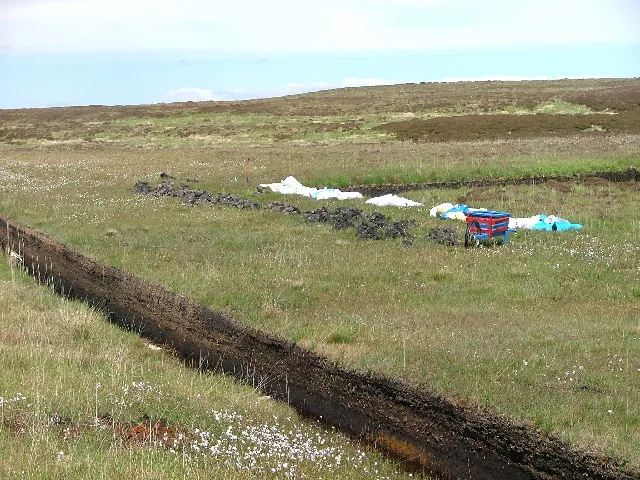
Photo: Mick Garratt, CC BY-SA 2.0, via Wikimedia Commons
There's a moment on a May morning in the far north-west when you'll smell the Highlands before you see anything happening. It's a rich, earthy tang — rain on old ground, smoke that hasn't been lit yet. Follow it down a single-track road, past a croft with a tractor parked at an odd angle, and you might catch it: a family out on the bank, cutting peat.
Most visitors arrive in spring expecting empty glens and maybe an early midge. What they don't expect is a harvest. But for centuries, May and June have been the months when Highland communities turned to the bogs, cutting fuel for the winter to come. It still happens — quietly, without signage, in places where the road gives out — and if you're lucky enough to see it, it's one of the most humbling things the Highlands can show you.
What Peat Cutting Actually Looks Like
Forget images of industrial machinery. Traditional peat cutting is almost meditative in its slowness. A bank of peat is exposed — often a long trench cut into the moor — and the cutter slices blocks, or torves, using a tusker, a broad-bladed spade with a blade set at an angle. Each block is lifted by hand and laid out on the moor in neat rows to dry.
That's the rhythm of it: cut, lift, lay. Cut, lift, lay. Whole families turn out — grandparents who've worked the same bank for fifty years, grandchildren who'd rather be anywhere else until, mysteriously, they wouldn't. The drying takes weeks. The peat has to be turned as it cures, and by late summer the stacks are built beside the croft, black and sculptural, ready for the stove.
It's a calendar written into the landscape. And unlike most farming traditions, the peat bank follows no supermarket logic — you cut in May what you'll burn in January. Nothing about it is quick.
Why the Bog Shapes Everything
Peat is partially decayed vegetation, compressed over thousands of years in waterlogged ground. In the Highlands it's everywhere — deep, dark, and fundamental. It filters the rain that fills the burns and rivers, which is why Highland water so often runs the colour of strong tea. Fishers talk about the 'black water' rivers of Sutherland and Wester Ross; that colour is the bog, gently flavouring everything it touches.
And then, of course, there's whisky. The smoky punch of a dram from Islay or the mainland's peatier distilleries comes from peat smoke used to dry the malt. Distillers talk about 'phenol levels', but the origin story is simpler: someone once dried barley over a peat fire, and the taste of the moor stayed in the glass. When you stand at a bank in May, you're standing at the very start of that supply chain.
Where (and How) to See It Respectfully
Peat cutting remains a working activity, not a show. That matters. The banks belong to crofters and their communities, and a family cutting peat is doing a job, not staging a demonstration.
A few ground rules worth observing:
- Ask before you photograph. If you see someone working a bank, a friendly word goes a long way. Most folk are happy to chat once they know why you're there.
- Never walk on the bank or the drying peat. A careless boot can undo weeks of drying. Keep to the edges, or better, the road.
- Park considerately. These are working crofts on single-track roads. Passing places exist for a reason.
- Don't take peat. It sounds obvious, but hand-cut peat belongs to the family that cut it.
Your best bet as a visitor is to encounter the season indirectly. Museums and heritage centres in areas like Sutherland and Lewis sometimes run demonstrations, and a few crofting communities host open days. Otherwise, simply keep your eyes open on the moorland roads of the north and west in late May — the freshly cut banks, dark as wet chocolate, are unmistakable.
The Bigger Picture: Bog, Carbon and Change
It's worth knowing that peat cutting sits in a shifting landscape. Restoration projects across the Highlands are rewetting drained bogs because healthy peatland stores carbon and slows flooding. Traditional hand cutting, done on a small scale over centuries, is a different beast from commercial extraction — many ecologists argue small-scale domestic cutting can be compatible with healthy bogs. But the conversation is live, and it's part of the story. The peat bank you see in May is both a tradition and a question: how do we keep the old ways without costing the ground they stand on?
Why It's Worth Going Looking
You could drive the north-west coast in May and never notice any of this. But once you've seen a family working a bank — the swing of the tusker, the smell of the exposed bog, the rows of black blocks drying like dark bread — you'll read the landscape differently for the rest of your trip. Every croft stack becomes a story. Every peaty burn becomes a chapter.
Spring in the Highlands is often sold as a quieter alternative to summer. What fewer people realise is that it's also the season of a hidden harvest, one older than any castle or distillery on the map. Go slowly, ask politely, and the moor will show you what it's been doing all along.