Follow the Wire: How Deer Fences and Stalker Paths Lead to the Highlands' Secret Hill Routes
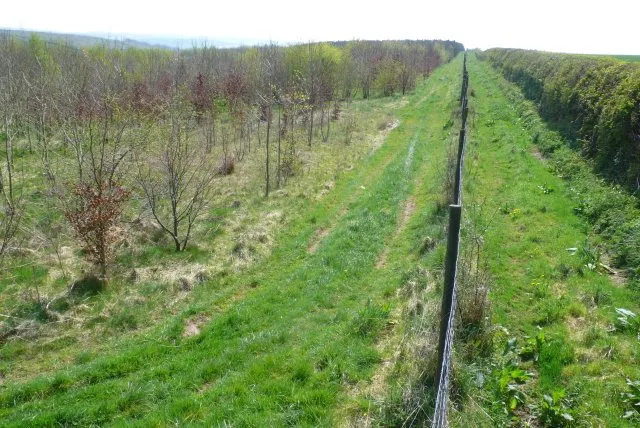
Photo: Nigel Mykura, CC BY-SA 2.0, via Wikimedia Commons
There's a particular kind of joy in cresting a Highland ridge and finding a path already there. Not a National Park waymarked trail with its little yellow arrows — a proper path, worn into the ground by generations of boots that had somewhere to be. Nine times out of ten, that path follows a fence. And if you learn why, you'll never look at the Highlands' hillsides the same way again.
Why the Wire Is There in the First Place
Deer fences are the most argued-about bits of metal in Scotland. Built to keep red deer out of regenerating woodland and commercial plantations, they slice across glens in long, unyielding lines — a magnet for criticism from conservationists, walkers and anyone who's ever had to climb one in the rain.
But here's the thing nobody mentions on the forums: those fences are usually built along sensible lines. The estate's fence-lifers — the folk who know every burn, bog and scree slope — chose routes that follow natural saddles, avoid the worst ground and hug the contours where possible. In other words, the fence often traces the easiest line up the hill. Which is exactly what a walker wants.
And alongside many of those fences run stalker paths: old tracks built so the estate's gamekeepers could get up and down the hill with a pony and, later, a quad. These aren't rough sheep trods — they're engineered routes, graded for loads, zig-zagging gently up slopes that hillwalkers elsewhere would be hands-and-knees-ing.
The Scottish Access Right — and Why It Matters Here
Thanks to the Land Reform (Scotland) Act 2003, most of this ground is legally open to you. There's no trespass in the English sense; you can cross estates, follow tracks and wander the glens, provided you act responsibly. That includes respecting the estate's work: leaving gates as you find them, keeping dogs under control during lambing and the stag stalking season, and — crucially — knowing how to cross a deer fence properly.
Some fences have stiles or gates; many don't. Where there's no crossing, the accepted practice is to cross carefully at a straining post (the thick wooden ones at corners), which won't sag under your weight. Never cut wire, never force a gap, and if a fence borders a plantation with a sign asking you to keep out, respect it — that's someone's crop, not just a barrier.
Three Routes Where the Wire Wins
Glen Feshie to the Moine Bhealach, Cairngorms. Glen Feshie is the poster child for the deer fence debate — the estate's wild land management has divided opinion for decades. But the old stalker paths threading up from the glen onto the Moine Bhealach are a joy: soft underfoot, gently graded, with views down the Feshie that'll stop you in your tracks.
Strathconon, Ross-shire. The glens west of the A835 are riddled with estate tracks that see more quad bikes than people. Follow the track up Meallan Bhuide from Strathconon and you'll find yourself on a ridge with views to both coasts, wondering why you've never met another soul up here.
Glen Roy and the Rough Bounds, Lochaber. The parallel roads of Glen Roy get the guidebook mentions, but the stalker paths that branch off into the surrounding hills — following fence lines up through the bracken — lead to viewpoints over Loch Linnhe that most visitors photograph from the car park at Glenfinnan instead.
Reading the Landscape Like a Local
Once you start noticing them, the Highlands' human geography opens up. A fence line converging on a col? That's your easiest line over. A track disappearing into forestry? It'll usually re-emerge on the far side, or join a fire break. Old iron stells — stone sheep shelters — often mark historic drove routes that predate any fence, and following them can reveal paths old enough that the OS map forgot to include them.
A word of caution, though: fences on the map aren't always fences on the ground. Some have fallen; some have been removed as estates rewild. Treat the wire as a hint, not a promise, and carry a map and compass regardless.
The Tension Worth Understanding
We'll be honest — this is opinion territory, and reasonable people disagree. Deer fences protect young trees that will, in time, become the Caledonian pinewoods everyone wants more of. They also fragment habitat and can kill birds like blackcock and capercaillie that fly into them at dusk. Many estates now mark fences with deer fencing tags or remove them entirely once the woodland's established.
As a walker, you sit in the middle of that debate with a unique perspective: you see the ground up close, you see what's working and what isn't, and you vote with your boots. Following a stalker path isn't taking sides — it's using the landscape as it's been used for centuries, by the people who knew it best.
So next time you're planning a Highland walk, don't just look for summits. Look for the lines. Find the fence that follows the sensible route, the track that climbs the easy way, the path that generations of stalkers already solved for you. The wire's been leading the locals for years.
It might as well lead you too.